
Why Animation Is One of the Best Ways to Explain Complex Ideas

Some ideas are easy to explain.
Others are not.
Try explaining how a medical treatment works inside the human body, how a complicated piece of machinery operates, how a new digital platform processes information or how an organisation plans to change the way thousands of employees work.
You could write several paragraphs about it.
You could put everything into a presentation.
Or you could show people.
This is where animation becomes particularly useful.
Animation can transform complicated information into visual stories that people can understand more easily.
Instead of asking the audience to imagine what is happening, you can put the idea directly in front of them.
For businesses and organisations in Singapore, this makes animation useful for much more than advertising.
It can be used to explain, educate, train, introduce, demonstrate and communicate.
Why Are Complex Ideas Difficult to Communicate?
The problem is not always the idea itself.
Sometimes the person explaining it knows the subject so well that it becomes difficult to remember what it feels like to encounter it for the first time.
Industry terminology creeps into the explanation.
PowerPoint slides become crowded. Documents become longer. Before long, the audience is trying to understand five new concepts at once.
That is when communication starts to break down.
People generally understand information more easily when they can see how different ideas relate to one another.
Instead of saying:
"First this happens, which triggers this process, which then produces this result."
Animation can simply show it happening.
That ability to visualise information is one of the reasons animated explainer videos are used across industries ranging from healthcare and education to engineering, technology and corporate communications.
Animation Can Show What a Camera Cannot
Live video is excellent when you need to show real people, real environments and authentic experiences.
But cameras have limits.
You cannot easily place a camera inside a machine.
You cannot film a building that has not been constructed.
You cannot record what is happening inside a microscopic biological process.
You may also have a product that is still in development or a concept that only exists on paper.
Animation removes many of these physical limitations.
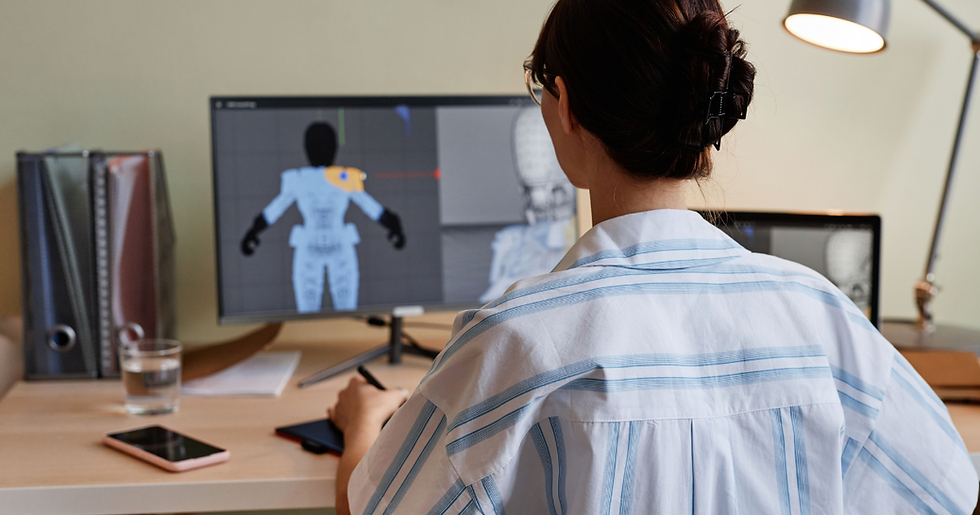
A 3D animation can take the viewer inside a product and reveal how individual components work.
A medical animation can visualise a biological process happening inside the human body.
A 2D animation can turn an abstract business process into a simple visual journey.
An animated explainer video can show an idea that does not physically exist yet.
Instead of trying to describe something invisible, animation makes it visible.
Animation Helps Simplify Information
Simple does not have to mean basic.
One of the most valuable parts of animation production is deciding what the audience actually needs to see.
A complicated subject may contain hundreds of details. That does not mean every detail needs to appear on screen at the same time.
Good animation creates a visual hierarchy.
Important information appears first.
Supporting information appears when it becomes relevant.
Movement can direct the viewer's attention from one idea to another.
Colours, icons, characters, diagrams and typography can help organise information visually.
The result is a story that guides the audience instead of asking them to figure everything out for themselves.
This is particularly useful for corporate animation, educational animation and training videos where understanding the message is more important than simply creating impressive visuals.
2D Animation Can Make Information Easier to Understand
2D animation is a popular choice for explainer videos because it is flexible.
Illustrations, icons, characters, diagrams, text and motion graphics can all be combined to explain a topic in a clear and approachable way.
Imagine a company introducing a new internal process.
A document might describe every stage of the process in detail.
A 2D animation could instead show an employee moving through each stage step by step, with graphics appearing only when they are needed.
The information is the same.
The experience of receiving that information is completely different.
This is why 2D animation can work well for:
Corporate communication
Employee training
Educational content
Public awareness campaigns
Healthcare communication
Product explanations
Process demonstrations
Social media content
Internal company initiatives
The animation style can also be adapted depending on the audience.
Content for children might use colourful characters and playful movement.
A corporate explainer video may use cleaner graphics and a more sophisticated visual style.
Healthcare animation may need to feel reassuring, informative and easy to follow.
There is no single animation style that works for every message.
The visual approach should follow the communication objective.
When Does 3D Animation Work Better?
Some ideas need more depth.
This is where 3D animation becomes useful.
3D animation allows products, spaces and objects to be visualised from almost any angle.
It can show how different components connect, reveal internal mechanisms or demonstrate how something changes over time.
For companies working with physical products, engineering, manufacturing, architecture, healthcare or technology, this can be especially powerful.
Imagine launching a new machine.
You could film the exterior and explain what happens inside it.
Or you could create a 3D animation where the exterior becomes transparent and the audience watches the entire internal process.
The second approach can communicate information that would otherwise be difficult to see.
3D animation and CGI can also be used when realism and visual impact are important.
Product launches, event content, digital advertising and large display screens can all benefit from visuals that would be difficult or expensive to create through traditional filming.
Animation Can Make Corporate Communication More Human
Corporate information has a reputation for being dry.
It does not have to be.
A new policy, company initiative or training programme may be important, but that does not automatically make people interested in learning about it.
This is where storytelling matters.
Instead of presenting a list of instructions, an animation can place those instructions within a situation the audience recognises.
Characters can experience a problem.
The audience can see the consequences.
A solution can then be introduced naturally through the story.
Humour, personality and familiar situations can also help information feel less formal without reducing its importance.
The objective is not to turn every corporate message into entertainment.
The objective is to make the communication easier to pay attention to.
Animation Is Useful for Healthcare and Medical Communication
Healthcare information can be particularly challenging because it often involves technical terminology, invisible biological processes and subjects that may already feel overwhelming to patients.
Animation provides a way to explain these topics visually.
For example, animation can show how a condition develops, how a treatment works or what a patient might experience during a particular process.
The visual style can also be adjusted depending on the audience.
Content designed for medical professionals may need more technical detail.
Patient education content may need to simplify the same information and use more approachable language and visuals.
The most important thing is accuracy and clarity.
The animation should support the information rather than distract from it.
Animation Can Improve Training and Education
Training videos often have a difficult job.
They need to communicate important information while keeping people interested long enough to absorb it.
Animation can help break information into smaller visual sections.
Processes can be demonstrated step by step.
Unsafe and correct behaviours can be compared visually.
Important information can be repeated without feeling like someone is simply reading from a manual.
Animation is also consistent.
Once a training animation has been produced, every viewer receives the same explanation.
For organisations with larger teams, this can help standardise how certain concepts and processes are communicated.
Why Not Just Use AI Generated Content?
AI tools have made it easier than ever to generate images, video clips and graphics.
They can be useful tools during the creative process.
But producing an effective animation still requires decisions that go beyond generating visuals.
What should the audience understand?
What information should appear first?
What can be removed?
How should the story flow?
Which visual style suits the brand?
How fast should the animation move?
Where should the audience focus?
How does the animation support the script and voiceover?
These are storytelling and communication decisions.
The technology used to produce the visuals is only one part of the process.
A visually impressive animation that does not communicate clearly is still an ineffective explainer video.
How Long Should an Explainer Animation Be?
There is no perfect length for every animation.
The right duration depends on the amount of information that needs to be communicated and where the video will be shown.
A short social media animation may only need a few seconds.
A corporate explainer video might require one or two minutes.
A detailed educational or training video may need considerably longer.
Instead of beginning with a target duration, it can be more useful to begin with the key messages.
Ask:
What does the audience absolutely need to know?
What information is useful but optional?
What can be shown visually instead of explained verbally?
What can be removed without affecting the message?
A focused script usually leads to a stronger animation.
What Makes a Good Explainer Animation?
A good explainer animation is not necessarily the one with the most complicated animation.
It is the one that communicates the idea most effectively.
Strong explainer videos usually have a few things in common.
They have a clear objective.
They understand who the audience is.
They focus on the most important information.
They have a visual style that supports the message.
They use movement intentionally.
And they tell the story in a way that feels natural.
The audience should reach the end of the video understanding something better than they did before watching it.
That is ultimately the purpose of an explainer.
Choosing an Animation Studio in Singapore
If you are searching for an animation studio in Singapore, it can be tempting to focus entirely on animation style.
Style matters, but it is only one part of the process.
Look at whether the studio understands storytelling.
Consider how they approach scripts and storyboards.
Look at the types of subjects they have worked with.
Most importantly, consider whether they can take complicated information and turn it into something your audience will actually understand.
A beautiful video is valuable.
A beautiful video that communicates clearly is much more valuable.
Creating Animation With The Doodle People
The Doodle People is a Singapore based creative studio specialising in animation, live video production, interactive experiences and virtual worlds.
For animation projects, we believe the process should start with the message.
What are you trying to explain?
Who needs to understand it?
Why does it matter to them?
Once those questions are clear, the visual direction becomes much easier to define.
Depending on the project, that could involve 2D animation, motion graphics, character animation, 3D animation, CGI or a combination of different techniques.
The format should follow the idea, not the other way around.
Have Something Complicated to Explain?
You do not need to simplify your idea before speaking to an animation studio.
That is part of the creative process.
Whether you need to explain a product, process, medical topic, company initiative or technical concept, the goal is the same.
Take something complicated and make it easier for people to understand.
Explore our Animation Services to see how The Doodle People brings ideas and stories to life through animation.


Comments